Why CEOs Who Skip Reputation Audits Pay the Highest Price
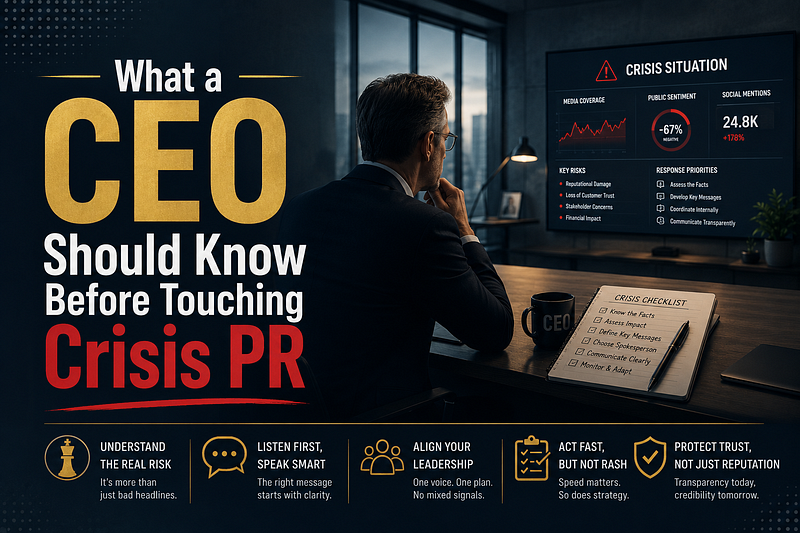
The Moment Most CEOs Get It Wrong
A crisis does not give you time to figure out who you are. By the time a story breaks, a regulatory inquiry lands, or a stakeholder goes public with a grievance, the window for deliberate thinking has already closed. What fills that window instead is whatever your organization built before the pressure arrived. If you built nothing, you respond with noise. If you built structure, you respond with authority.
Most CEOs do not realize this distinction until they are standing in the middle of a crisis PR situation that is moving faster than their team can manage, wishing they had done a reputation audit when they still had the time to act on it.
This is not a failure of intelligence or leadership capability. It is a failure of preparation. And it is one of the most common and costly mistakes that senior leaders make, not because they do not care about reputation, but because they assume that strong performance will protect them when things go wrong. It does not. What protects you in a crisis is message clarity, stakeholder trust that was built long before the headlines arrived, and a communications framework that gives your team something solid to stand behind.
What a Reputation Audit Actually Is
Before a CEO touches any aspect of crisis PR, they need an honest picture of where their organization actually stands. Not where they believe it stands. Not where last year’s brand survey suggested it stood. Where it actually stands, in the minds of the people whose opinions move outcomes.
A reputation audit is a structured assessment of that gap. It looks at:
- How your organization is currently perceived by key stakeholder groups, including investors, regulators, media, employees, and partners
- Where the gap exists between how you present your organization and how those groups actually receive it
- Which narratives about your organization are already circulating that you have not shaped or addressed
- Which issues, if they became public, would find your organization without a credible position to defend
- Whether your current communications infrastructure is capable of responding effectively under pressure
This assessment is not comfortable. It surfaces things that leadership teams would often prefer not to see. But it is the only honest starting point for any serious crisis communications work. Without it, a CEO entering a crisis PR situation is making decisions without the information those decisions require.
Spred Global Communications conducts this kind of assessment as a foundational step for organizations operating at high-stakes levels. The goal is not to produce a report. The goal is to give leadership a clear, accurate picture of the position they are actually defending before they are forced to defend it publicly.
Why Message Clarity Is the Variable Most Leaders Underestimate
The Cost of Inconsistency Under Pressure
When a crisis breaks, your organization will speak through multiple channels simultaneously. Your CEO will face media questions. Your legal team will be managing communications with regulators. Your head of HR will be fielding questions from employees. Your investor relations team will be managing calls from shareholders. If these groups are not operating from the same core message, your organization will say different things to different audiences, and those differences will be noticed, compared, and reported.
Message clarity is not about having a single approved statement. It is about having a shared understanding of what your organization’s position is, why it is the right position, and how it should be communicated across every stakeholder context. This requires work that happens before a crisis, not during it.

Building the Foundation Before You Need It
The organizations that communicate well during crises have almost always done three things before any crisis arrived. They have run a reputation audit that gave them an honest picture of their standing. They have built message clarity frameworks that their entire leadership team understands and can articulate. And they have invested in stakeholder trust that gives them credibility when they need to ask people to believe them under pressure.
None of these happen quickly. Stakeholder trust in particular is built through consistent behavior, reliable communication, and a track record of saying what you mean and meaning what you say. It cannot be manufactured during a crisis. It can only be drawn on.
Stakeholder Trust: The Asset You Either Have or You Don’t
Ask yourself an honest question. If your organization faced a serious public challenge today, which of your key stakeholders would give you the benefit of the doubt? Which ones would wait for more information before forming a judgment? And which ones would immediately look for the story that confirms what they already suspected about you?
The answers to those questions tell you exactly where your stakeholder trust stands. And they tell you what kind of crisis PR situation you would actually face, not the one you would want to face, but the one you have prepared for.
Organizations with high stakeholder trust face crises differently. Regulators engage with them differently. Journalists approach their statements with more credibility. Employees stay aligned rather than going quiet or going public. Investors hold their position rather than moving on the first sign of uncertainty. This is not luck. It is the result of sustained, deliberate work to build relationships before they are needed.
Spred Global Communications works with CEOs and leadership teams to build exactly this foundation. The work covers reputation audits, message clarity frameworks, and stakeholder engagement strategies designed to create the kind of trust that holds when conditions become difficult. As a global firm built for leaders who cannot afford to be misunderstood, Spred approaches every engagement with one question: what does this organization need to be believed, and by whom, before the pressure arrives?

What to Do Before the Next Crisis Finds You
You do not need to be in a crisis to start preparing for one. The best time to run a reputation audit is when your organization is not under pressure and your team has the space to act on what it finds. The best time to build message clarity across your leadership team is before a situation forces the conversation. The best time to invest in stakeholder trust is long before you need to draw on it.
If you are a CEO who has not done this work yet, the question is not whether you should. The question is how much longer you are willing to operate without the foundation that serious organizations build before they need it. Every month without that foundation is a month where your position is less defensible than it needs to be. Start the audit. Build the clarity. Earn the trust. Do it now, while the terms are still yours to set.


Comments
Post a Comment